Understanding the Monsoon
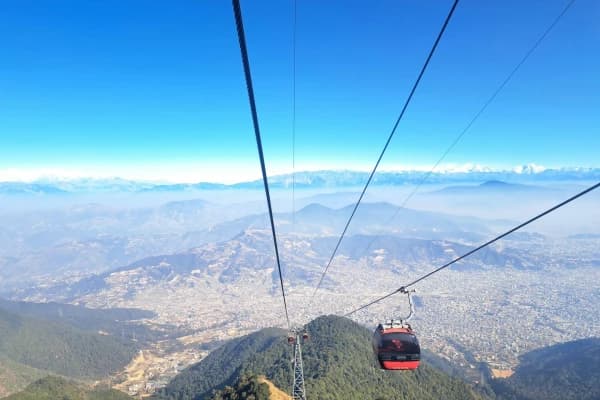
Driven by warm, moisture-rich winds from the Indian Ocean, the monsoon brings heavy rains, lush greenery, and dramatic skies. In the lowlands and central hills, showers typically arrive in the afternoon or evening — leaving mornings relatively clear and fresh. While some Himalayan trails become muddy and leech-prone, the landscapes are at their most vivid and alive during this season.
"Nepal in monsoon isn't a lesser version of Nepal — it's a different country entirely. Emerald terraces, roaring waterfalls, mist-draped peaks, and streets alive with festival color."
Best Treks & Destinations for the Monsoon
While certain routes become slippery and difficult, rain-shadow areas remain remarkably dry even at the height of the monsoon. Here are our top picks:
Upper Mustang (10–21 days)
RAIN-SHADOW CLASSIC
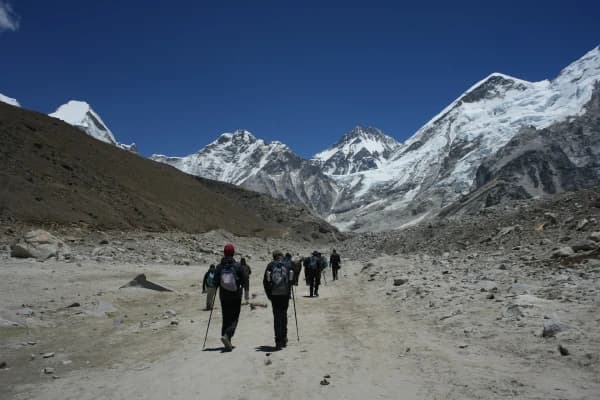
Sheltered by the Annapurna and Dhaulagiri ranges, Mustang receives very little rainfall. Its arid, desert-like terrain and ancient Tibetan culture make it one of Nepal’s finest monsoon destinations.
Nar Phu Valley (12–15 days)
OFF THE BEATEN PATH
Remote, culturally rich, and sitting in a natural rain shadow, Nar and Phu villages offer sweeping Himalayan views and a true off-the-beaten-path adventure.
Dolpo Region (14–21 days)
HIDDEN GEM
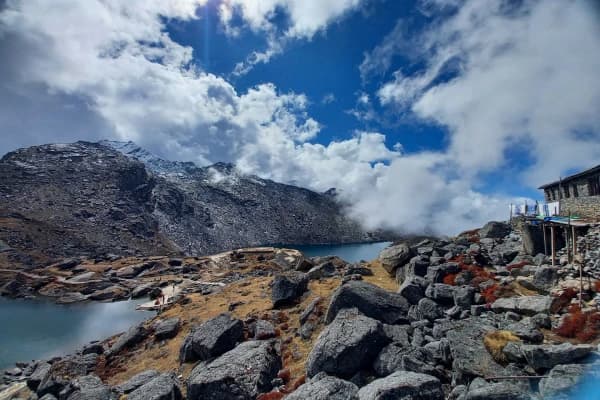
One of Nepal’s most mystical regions — ancient monasteries, the turquoise Phoksundo Lake, and dramatic high-altitude landscapes, all shielded from the rains by the Dhaulagiri massif.
Cultural Tours & Short Hikes (1–3 days)
SHORT & REWARDING
Short hikes to Nagarkot, Dhampus, and Australian Camp are especially atmospheric in monsoon. Heritage cities — Bhaktapur, Patan, and Gorkha — also come alive with festivals and local colour.
The Challenges: What to Expect
Monsoon travel requires honest preparation. Here’s a clear-eyed look at what you may encounter:
Natural Hazards
- Landslides and mudslides on steep slopes
- Swollen rivers causing bridge damage
- Flash floods, including in Kathmandu Valley
Trail Conditions
- Slippery, muddy terrain
- Reduced mountain visibility due to cloud cover
- Leeches in humid forest zones
- Some teahouses closed in the off-season
- Higher risk of waterborne illness
Logistics
- Flight delays and cancellations to remote airstrips (Lukla, Jomsom)
- Eroded trails requiring flexible route changes
None of these challenges are insurmountable — the right preparation and a local expert by your side make all the difference.
Why Many Travellers Prefer Monsoon
Despite the challenges, those who plan well and choose their destinations wisely discover rewards that no other season can offer:
- Fewer crowds — Popular trails and heritage sites are pleasantly quiet, making your experience more personal and authentic.
- Extraordinary scenery — Terraced rice fields turn emerald green, waterfalls thunder at full strength, and hillsides burst with wildflowers.
- Better value — Hotels and trekking agencies offer meaningful off-season discounts, stretching your travel budget further.
- Rich cultural encounters — Festivals like Ropai Jatra (rice planting) and Indra Jatra offer a window into traditions rarely witnessed by foreign visitors.
- Specialist adventures — White-water rafting reaches its peak, and botanists and birdwatchers will find monsoon Nepal especially rewarding.
Tips for Travelling in Monsoon Nepal
Pack for rain: Waterproof jacket, backpack cover, dry bags, trekking poles, and quick-dry clothing are essential.
Start early: Mornings are typically clearer before afternoon showers roll in. Plan hikes accordingly.
Leech protection: Use repellents, leech socks, or gaiters in forested and humid terrain.
Local experts: A knowledgeable guide can navigate changing conditions and adjust routes safely.
Book ahead: Many teahouses close in the off-season; confirm availability well in advance.
Stay healthy: Drink purified water, wash your hands frequently, and guard against waterborne illness.
Backup plan: Landslides or flight delays can disrupt plans—keep alternative routes in mind and check forecasts regularly.
Safer routes: Choose rain-shadow routes like Upper Mustang, Nar Phu, Dolpo, and Jomsom–Muktinath, which are reliably drier options.
Monsoon Photography
For photographers, the monsoon is a dream. Swirling clouds over snow peaks, emerald terraces, waterfalls at full force, and village life framed by lush green hills—the palette is unlike any other season. If dramatic light and moody atmosphere are what you chase, the monsoon is your season.
A Final Note
Climate change is making Nepal’s monsoon increasingly unpredictable—with heavier rainfall in shorter bursts, longer dry spells, and more frequent floods and landslides. This makes planning with experienced local operators more important than ever.
Yet, at its heart, the monsoon in Nepal is not just about rain. It’s about life at its most vivid: terraces dripping with green, rivers roaring, festivals lighting up ancient courtyards, and mountains half-hidden in cloud. For travelers willing to embrace the season on its terms, it offers something rare—a Nepal that feels entirely your own.