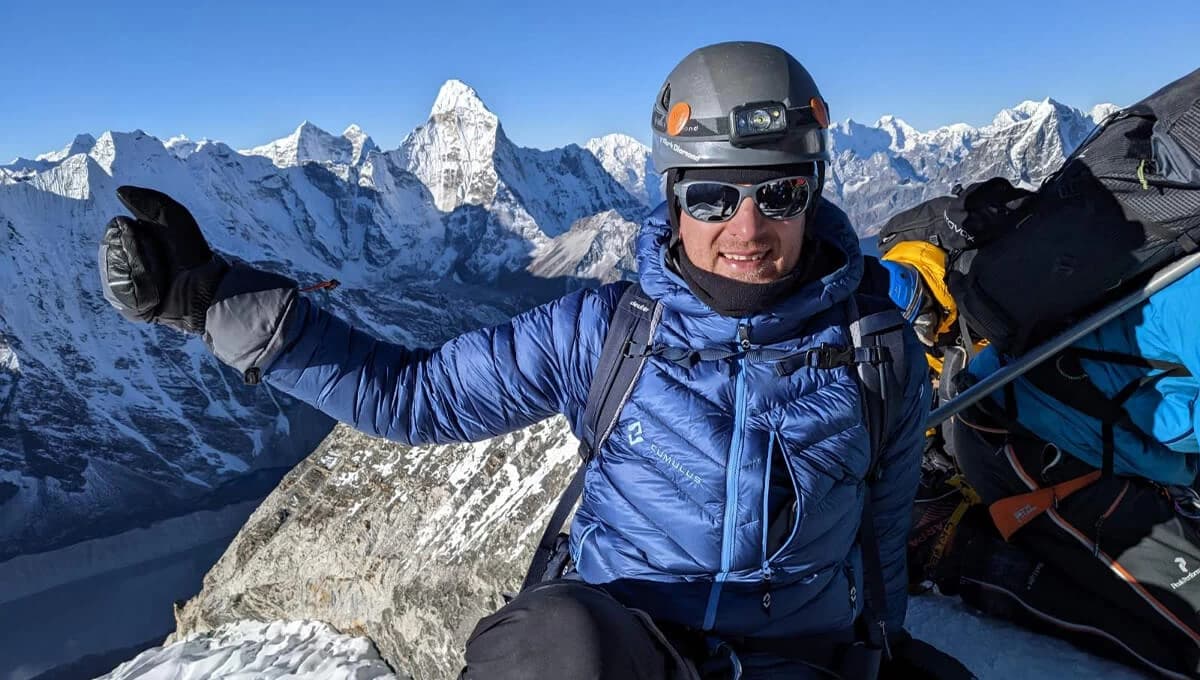
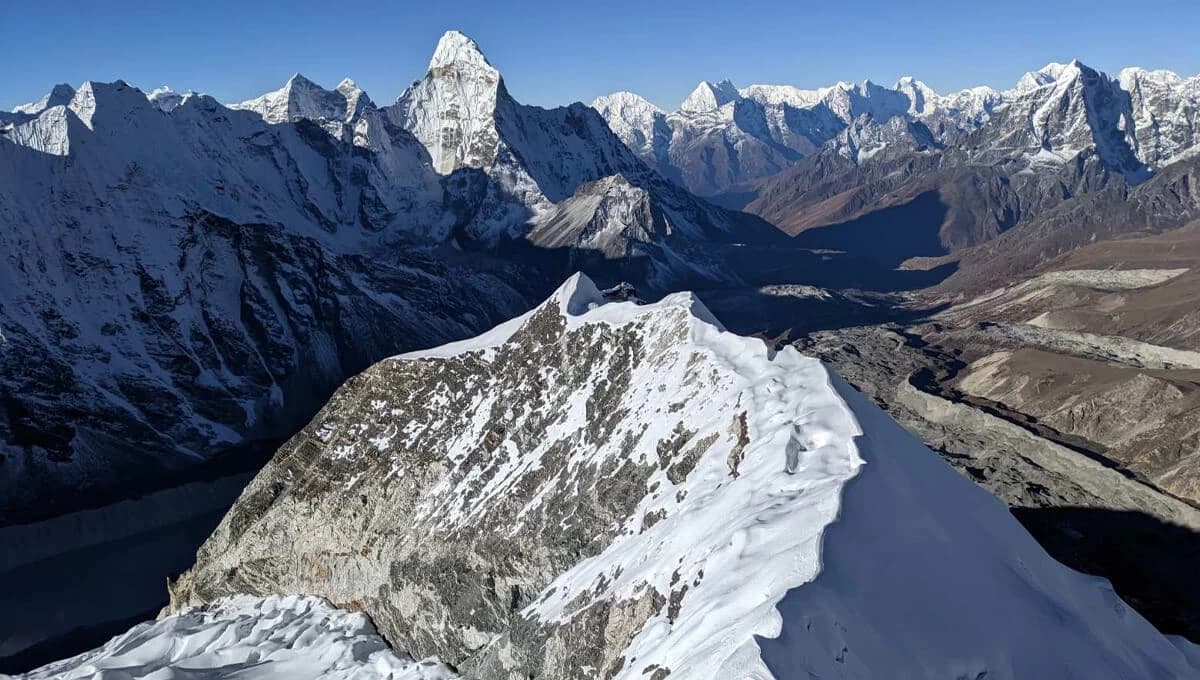
Island Peak is one of the most stunning peaks near Mount Everest in Solukhumbu district of Nepal. It is one of the popular climbing peaks known as Imja Tse in Tibetan language among climbers. It is enough to be generally fit to climb it. Previous climbing experience is advisable but we are able to instruct people who have no climbing skills and lead them to the summit.
Our climbing guide will give you the instructions of climbing and will safely lead you to the summit and back. The peak was first ascended in 1956 by a Swiss expedition team for training before climbing Lhoste and Mt. Everest. During the trip, our tents are set in the Island Peak Base Camp as there is no water in the high camp.
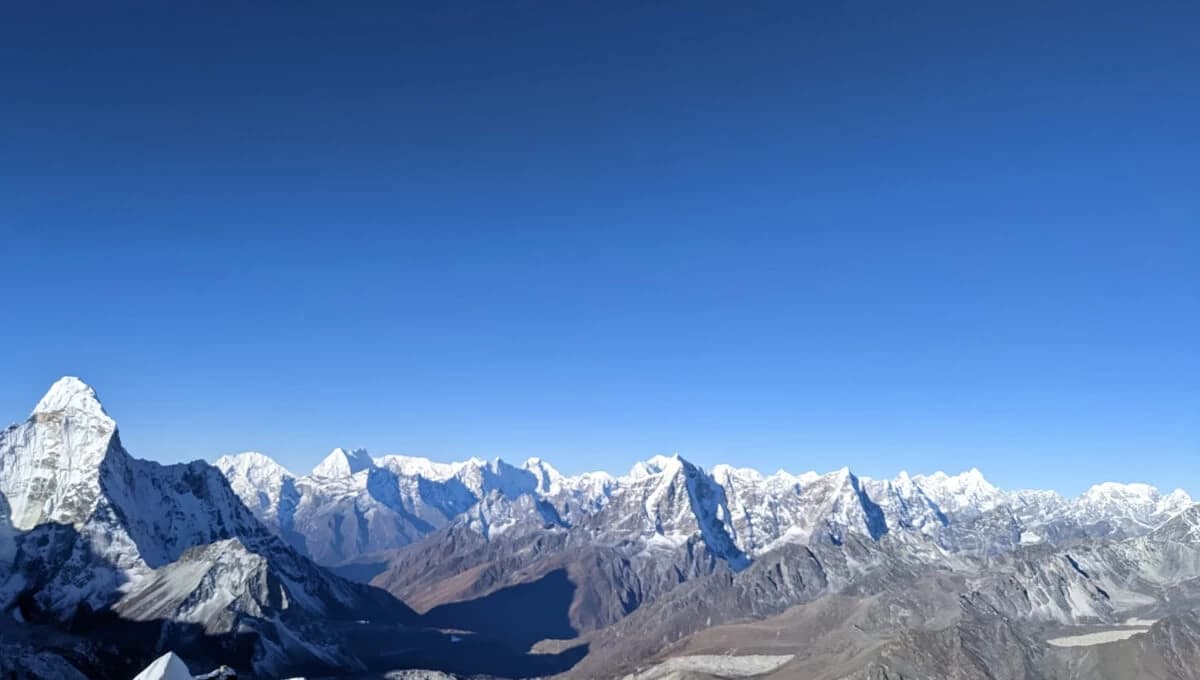
Next day, in the morning, we leave the Island Peak Base Camp and set for the summit. The ascent will take about 5-6 hours and the descent 4-5 hours. The summit day could be a bit challenging but you will find it worth the effort once you are at the summit and see the closest view of the mountains including Mt. Everest, Lhoste and many other peaks. Mt. Everest is only 10 km away from the summit of Island Peak.
Best Season for Island Peak Climbing
The best times to climb Island Peak (Imja Tse) are in the spring (March to May) and autumn (September to November) when the weather is most stable, the skies are clear, and the views of the mountains are amazing. Temperatures are mild during these times, and trails are easier to see, which makes it much safer and more likely to reach the top.
Heavy rain, slippery trails, and a higher chance of landslides make the monsoon season (June to August) a less good time to climb. Winter (December to February) is very cold and snowy. Only climbers who are well-prepared for extreme weather should go then. Spring and autumn offer the perfect balance of visibility, weather, and trekking/climbing comfort.
What Makes Island Peak Climbing Special?
-
Island peak climbing is one of the most famous trekking peaks in Nepal. It combines high-altitude trekking with real mountaineering.
-
Standing at about 6,165–6,189 meters, the summit offers stunning panoramic views of Everest, Lhotse, Nuptse, Ama Dablam, and other Himalayan giants from a vantage point few trekkers reach.
-
The climb is unique because it gives you a real summit experience that is more difficult than trekking but still possible for people who haven't done a lot of expeditions.
-
Along the way, you'll see Sherpa villages, Buddhist monasteries, glaciers, and high alpine terrain. This will give you a chance to learn about the culture and have a technical climbing adventure at the same time.
How Difficult is the Island Peak Climbing?
Island Peak is classified as moderate to challenging in terms of technical difficulty. While it is easier than major expedition peaks, it still involves steep snow and ice sections, fixed rope climbs, and glacier travel, requiring proper use of crampons, ice axes, and harnesses.
The final summit push often demands long days of climbing at altitude, sometimes up to 10–12 hours, making good physical fitness and mental determination essential. To safely deal with the altitude gain, acclimatization days and the right pace are very important.
Permits Required for Island Peak Climbing
Climbing Island Peak requires several official permits:
- Island Peak Climbing Permit (issued by the Nepal Mountaineering Association) — amount varies by season.
- Sagarmatha National Park Entry Permit — mandatory for entry to the Everest region.
- Khumbu Pasang Lhamu Rural Municipality Permit — local area fee for trekking access.
- TIMS Card — if trekking independently (often included in organized climbs).
Nepal Excursion will arrange all the necessary permits in advance, ensuring a smooth and hassle-free experience.
Safety and Precautions
Safety on Island Peak is paramount.
-
Always climb with a licensed climbing guide and trained Sherpas who can fix ropes, assess snow conditions, and lead technical sections.
-
Bring a full first-aid kit with you, including medicine for altitude sickness, and make sure your travel insurance covers high-altitude rescue or helicopter evacuation.
-
Wear appropriate layered clothing and ensure regular hydration and nutrition.
-
You need fixed ropes and guide support for the summit push, and you should follow all instructions when the trail is steep or icy.
-
At high altitudes, the weather can change quickly, so it's important to be able to change your plans and make safe decisions.
Training and Preparation
Preparation for Island Peak should begin 3–6 months before departure. If you can, work on your cardiovascular fitness (hiking, running, cycling), leg and core strength (squats, lunges, stair climbs), and the basics of mountaineering. Use a weighted backpack to get used to long days of walking and climbing.
Knowing how to use climbing gear like crampons, an ice axe, a harness, and fixed line movement is very helpful and is often taught at base camp, but fundamental comfort with heights and exposure will boost confidence and performance.
Mountain Views
Island Peak rewards climbers with breathtaking Himalayan panoramas that are among the finest in the Everest region. FFrom high up, you'll see the breathtaking views of Mt. Everest, Lhotse, Nuptse, Ama Dablam, Makalu, and Cho Oyu, all surrounded by rough ridges and glacial valleys.
As you climb higher, the views of the peaks and icefalls change, and each higher camp has more dramatic views. Many climbers describe the summit scene as one of the most memorable in Nepal’s high mountains.
Altitude Sickness and Prevention
Given that the summit of Island Peak rises above 6,000 m, altitude sickness is a serious concern.
To reduce risk:
-
Include multiple acclimatization days during the trek portion (e.g., Namche, Dingboche, Chhukung).
-
Drink plenty of water, eat well, and don't push yourself too hard at the start of the climb.
-
Recognize symptoms of altitude sickness — headache, nausea, dizziness — and alert guides immediately.
-
When you can, follow the rule "climb high, sleep low."
Safety and reaching the summit are much better when you acclimatize and pace yourself properly.
What to Expect in Island Peak Climbing ?
The trip to Island Peak climbing starts from Kathmandu depending upon the availability of direct flight to Lukla , if the direct flight to Lukla isn't possible then you will have option to choose either you prefer to pay extra about 500 usd per person for the helicopter flight to Lukla or take the early morning drive about 2 am from Kathmandu to Manthali and from Manthali fly to lukla and back the same way.
Most of the route of the trek you will take the same trails that lead to Everest Base Camp Trekand from Dingboche you will take the different route to get to Chukung and towards Island Peak Base Camp. The Island Peak is considered as the trekking peak of Khumbu valley so even the beginner who is in good physical condition can manage Island Peak Climbing. If the weather is not favourable then we have included a spare day just to have another attempt for the Island Peak Summit Push.
Sometimes if the weather is not favourable then you might have to completely resign from the trip as nobody can influence the weather in the mountains. You can expect a stunning view of Mt. Everest and incredible landscape if the weather is fine from the summit of Island Peak.
Internet Access and Mobile Network in the Tour
Mobile network coverage in the Everest region is generally available in lower and mid‑elevation villages like Namche Bazaar, Tengboche, and Dingboche via Ncell/NTC, and many teahouses offer Wi‑Fi for a small fee.
Connectivity is very limited or nonexistent at higher camps, like Chhukung, base camp, and above. You might be able to charge your phone at teahouses for a fee at some stops, but it's best to bring a power bank for important electronics on the trip.
Why Choose Nepal Excursion for Island Peak Climbing
Nepal Excursion offers a fully supported climbing experience with professional climbing guides, handling permits, planning logistics, and putting safety first.
We ensure proper acclimatization days, comfortable accommodations where possible, transportation, and cultural insights along the route.
With Nepal Excursion you benefit from experienced local knowledge, emergency support structures, and a structured itinerary designed to maximize summiting potential and safety. Our focus is on customer care and logistics minimizes trekking concerns so you can focus on climbing.
Things You Should Know
-
Climbing Island Peak involves varying accommodation types — teahouses in lower regions and camping tents near base/high camps.
-
It's important to be able to change your plans quickly because the weather can change quickly.
-
Hot showers and Wi‑Fi are often available at teahouses for a fee but become scarce at higher camps.
-
You need cash (Nepali rupees) to buy things on the trail.
-
Always follow safety and environmental rules, respect the local culture, and pay close attention to what your guide says.
Is Island Peak Climbing for Me?
Island Peak climbing is great for fit trekkers who want to climb a Himalayan peak without the hassle of a big expedition. This adventure is for you if you like long days of trekking, are in decent shape, and are excited about basic technical climbing.
It challenges both body and mind and is often described as a “next step” peak for those who have completed trekking experiences and want to try true summit climbing with rope and ice skills.
It may be less suitable for complete beginners with no trek experience or individuals with serious altitude sensitivity unless proper preparation is done.
Meals & Accomodation
Meals on the trek portion are typically hearty and Nepalese/Western style — including Dal Bhat, soups, noodles, eggs, and hot drinks — designed to sustain energy for climbing. Lower elevations have teahouse lodges with simple but comfortable rooms and shared bathrooms.
At base and high camps near Island Peak, you will stay in camping tents with dining and kitchen support provided by the climbing crew. As you go higher, the quality of the accommodations goes down, but they are still good enough for resting and recovering while you climb to the top.
Plan Your Island Peak Climbing Today
Most Island Peak trips last between 1 and 20 days and include both the classic trek through the Everest region and the attempt to reach the summit. It begins in Kathmandu and includes a scenic flight to Lukla, trekking through Sherpa villages, stops to get used to the altitude, climbing lessons at base camp, and a push to the top.
Nepal Excursion will take care of all the details, like permits, guides, camps, meals, transportation, and support staff, so that you can have a safe and smooth climbing experience that is tailored to your pace and level of preparation.
Highlights
-
Summit Island Peak (~6,189 m) — a major achievement for climbers.
-
Spectacular panoramic views of Everest, Lhotse, Nuptse, Ama Dablam, Makalu.
-
Walk through traditional villages and monasteries in the Everest Region.
-
Combination of trekking and technical peak climbing.
-
Cultural immersion in Sherpa heritage and Himalayan hospitality.
Why Choose Island Peak Climbing
Island Peak climbing offers one of Nepal’s best opportunities to experience true high‑altitude climbing without extreme expedition requirements. It challenges trekkers with ropes, ice axes, and crampons, rewards them with views of the Himalayas that they will never forget, and bridges the gap between trekking and mountaineering — all supported by local expertise and structured itineraries.
Packing List, Gears, and Equipment
Essential items include:
-
Sturdy mountaineering boots and trekking boots
-
Climbing harness, ice axe, crampons, helmet
-
Layered clothing: base layers, insulating fleece/down jacket, wind/waterproof outer layers
-
Thermal underwear, gloves, warm hat, balaclava/neck gaiter
-
Backpack (40–50 L) + daypack
-
Sleeping bag rated for extreme cold
-
Trekking poles
-
Sunglasses, sunscreen, lip balm
-
Headlamp with extra batteries
-
Water purification and reusable bottles
-
Personal first‑aid kit and medications
-
Power bank for electronics
Cost / Price of Island Peak Climbing
The prices of Island Peak climbing can vary depending on the services included in the offer of your trekking agency. For the inclusive offer we mentioned the price for different sizes of people in the most economical way. Our Island Peak Climbing includes two days of private sightseeing in Kathmandu with entrance tickets, private guide, car, the accommodation included in the offer is top 3+ or 4 star category hotel in Kathmandu and once you are already in the trip all meals are included without any restrictions which can be freely chosen from the menu card except dessert. You can feel free to discuss the price we mentioned and services included, depending on the budget to upgrade or degrade the trip.