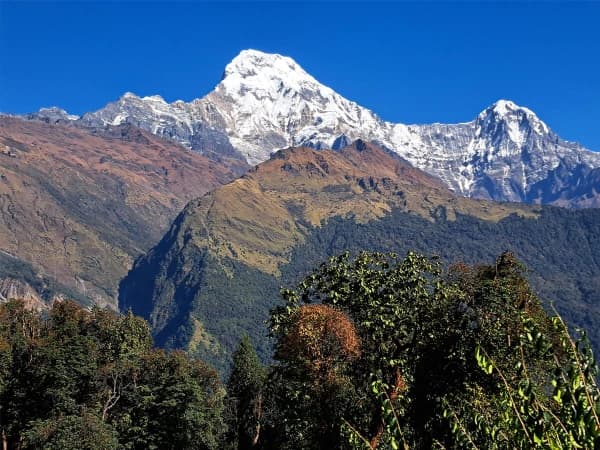
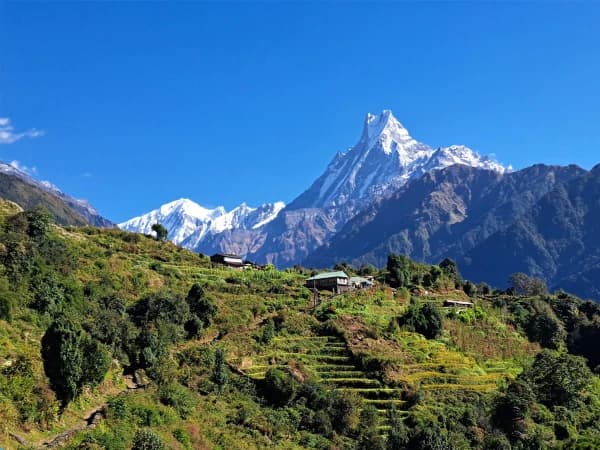
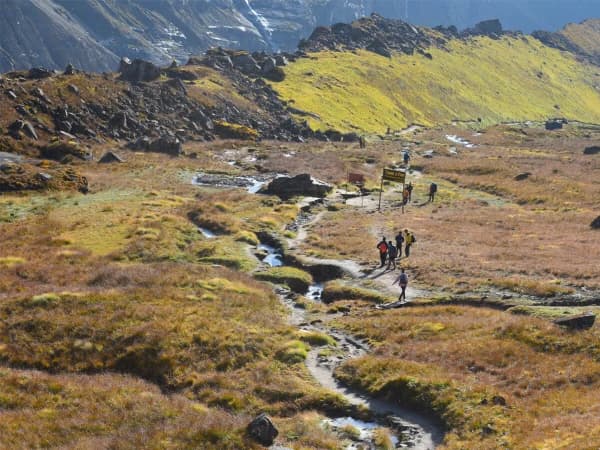
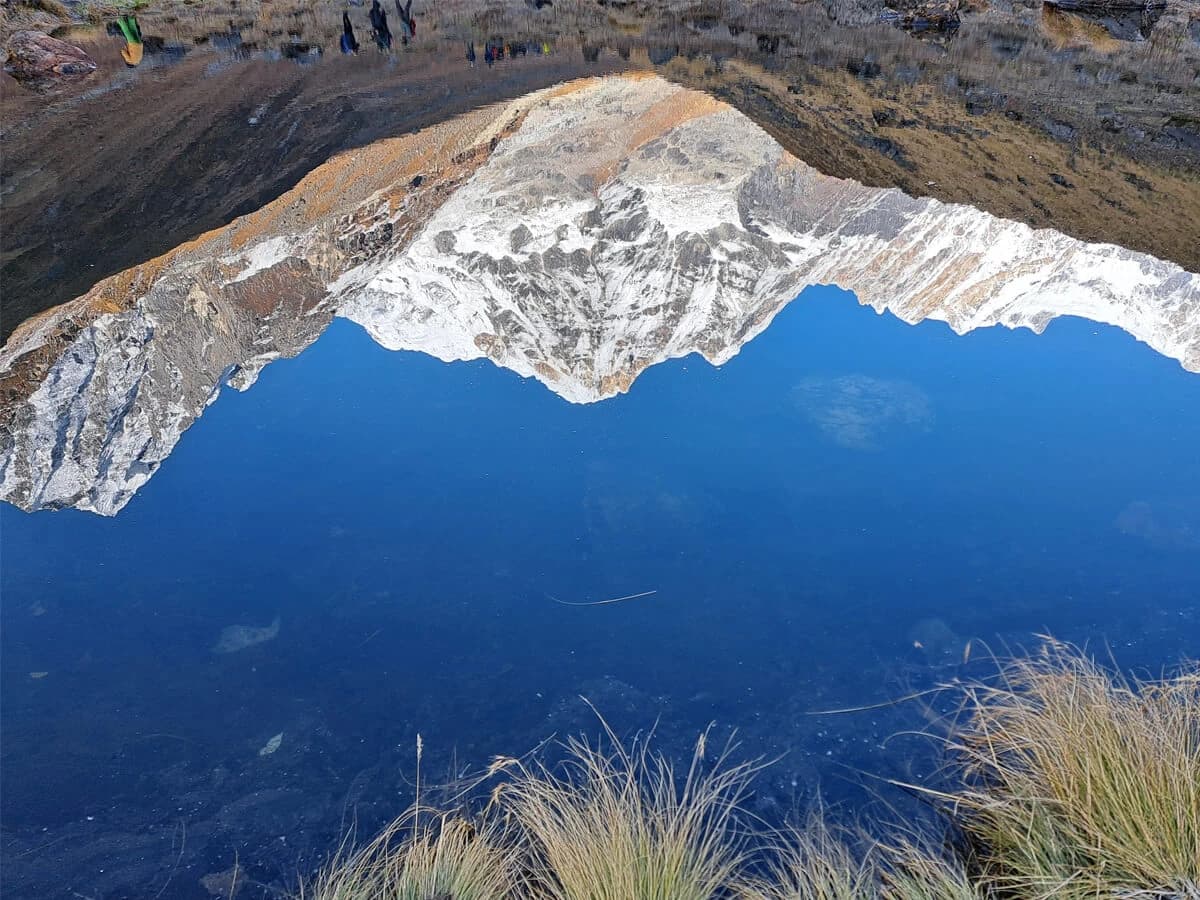
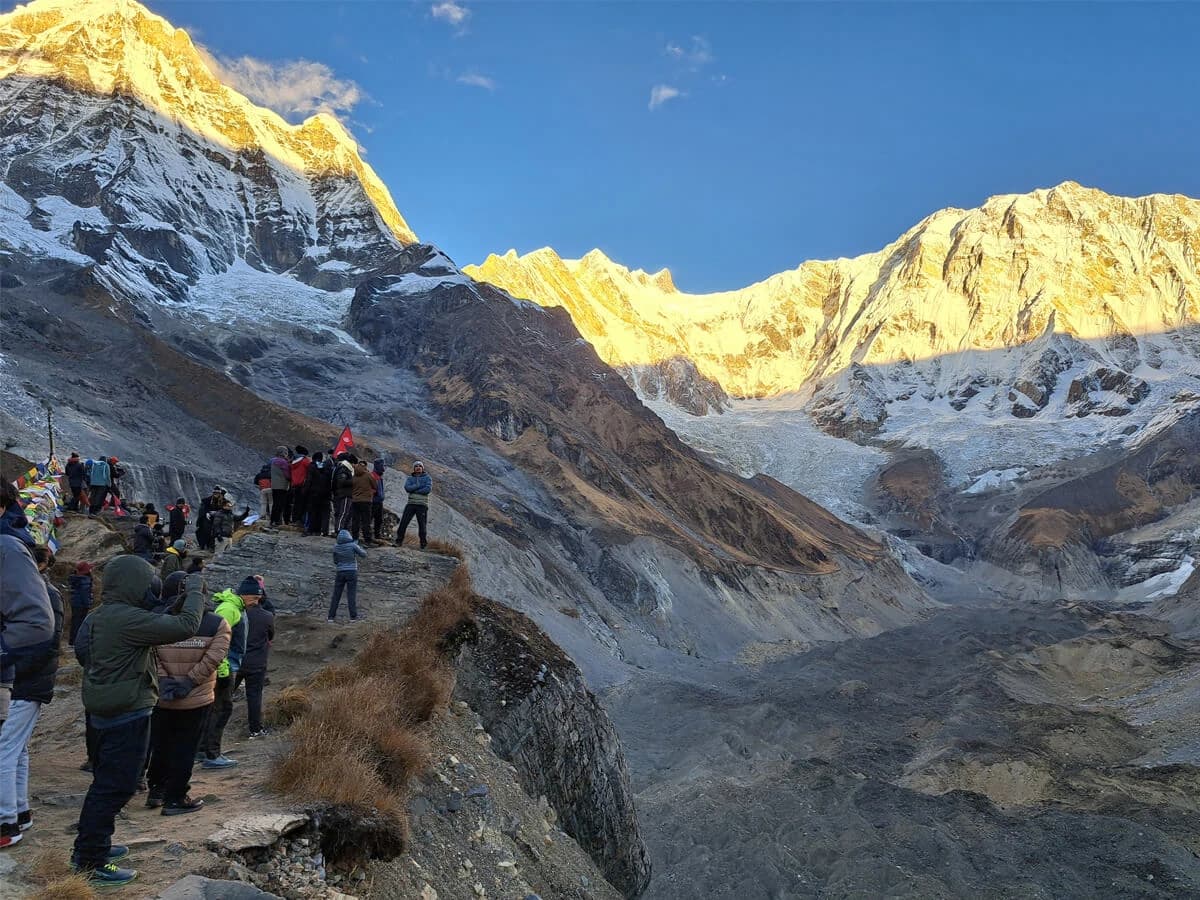
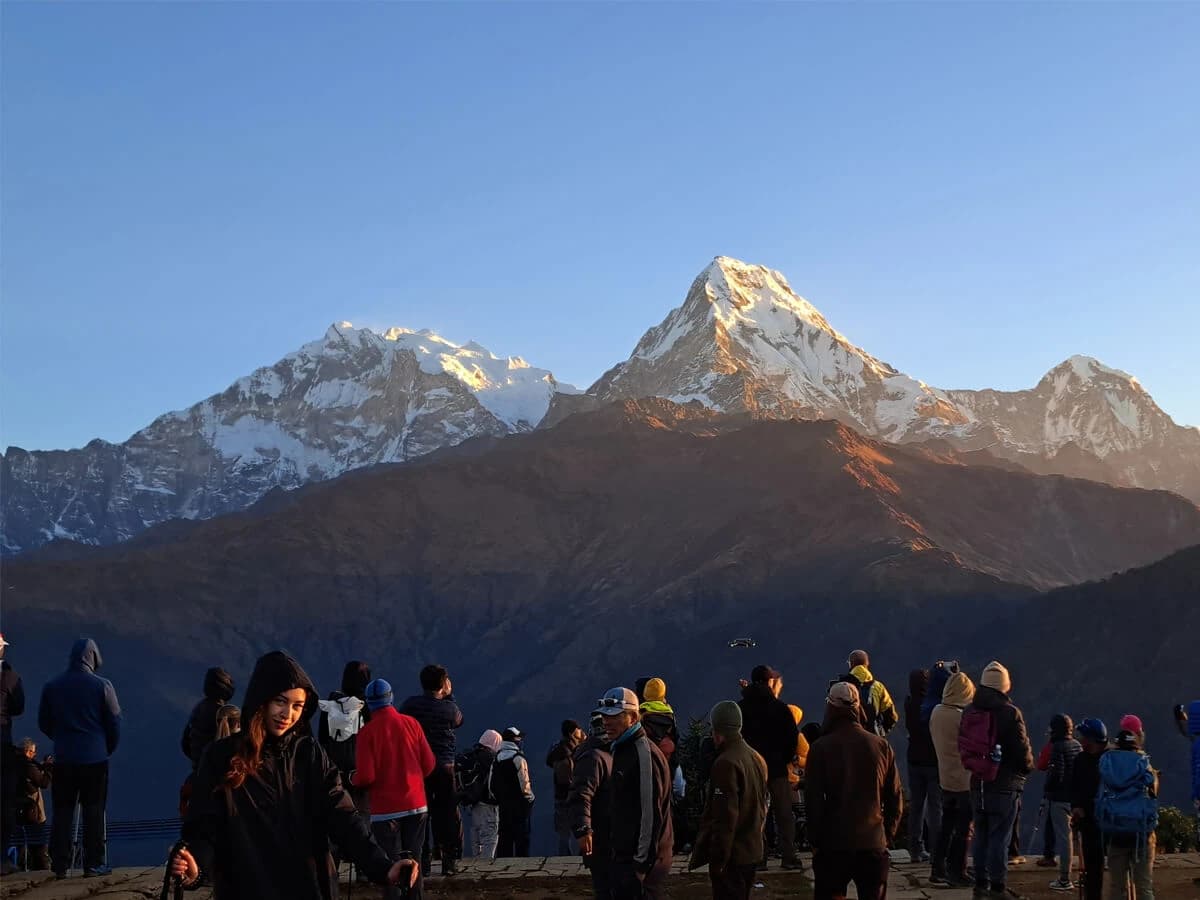
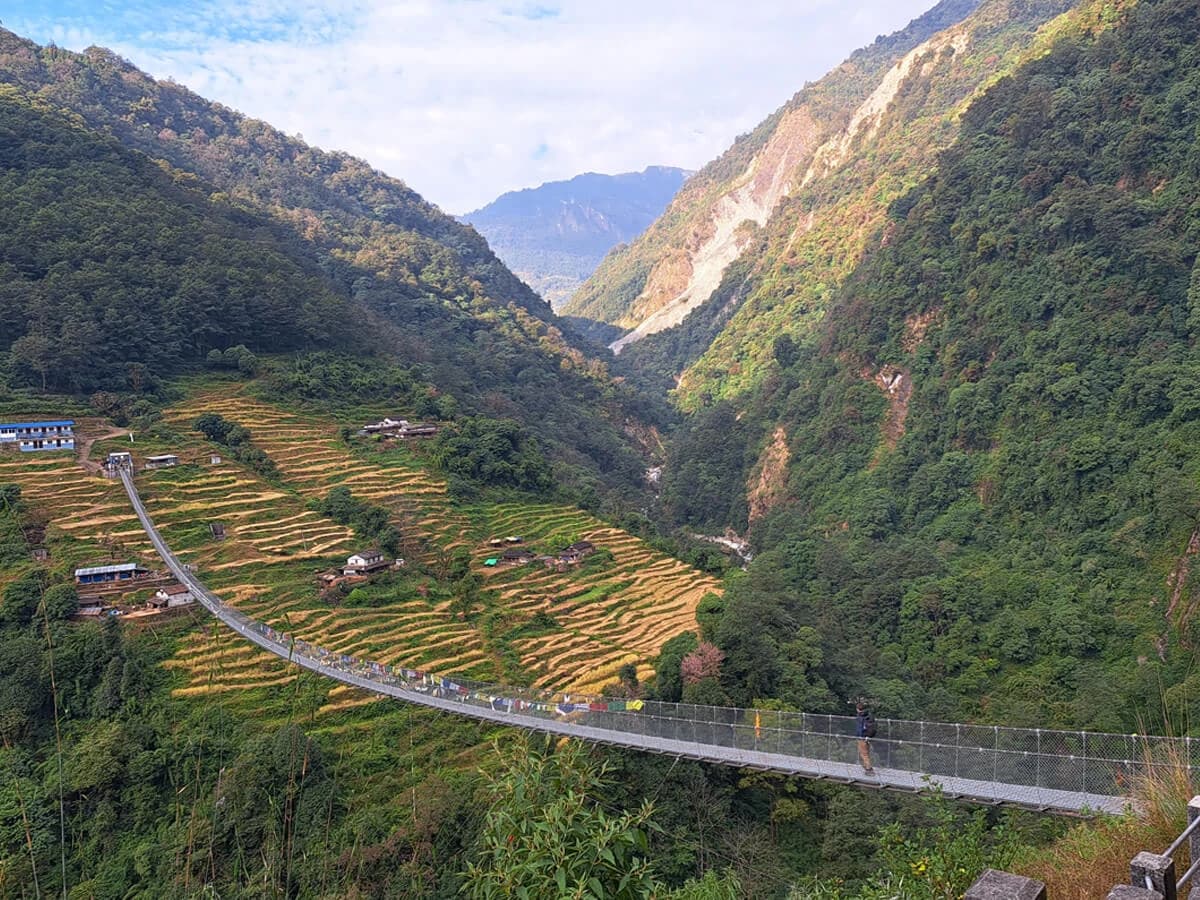
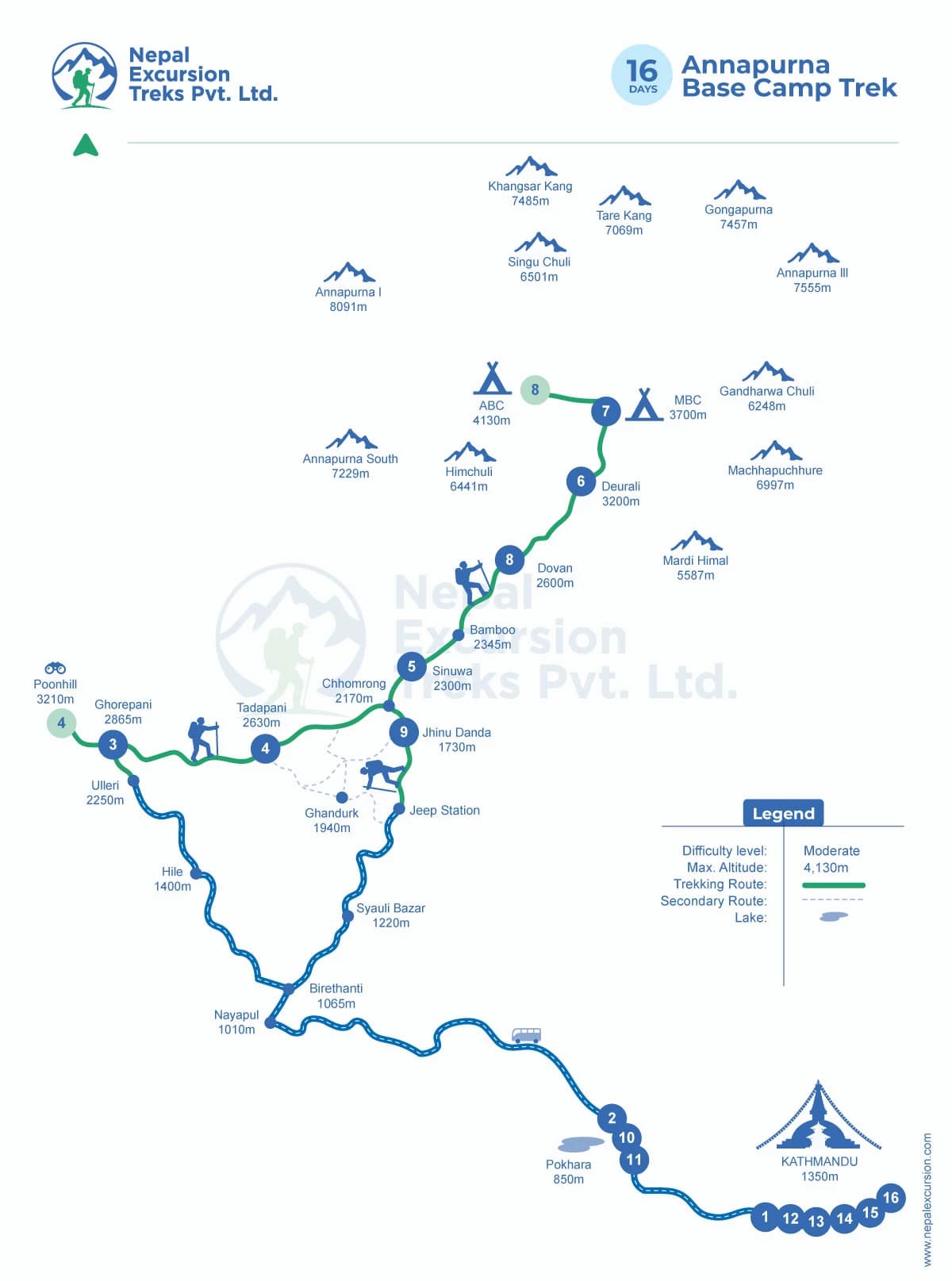
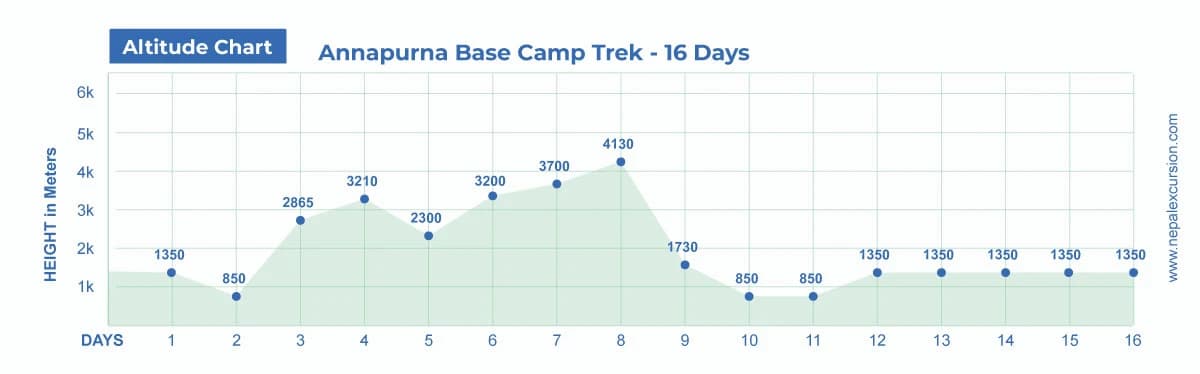
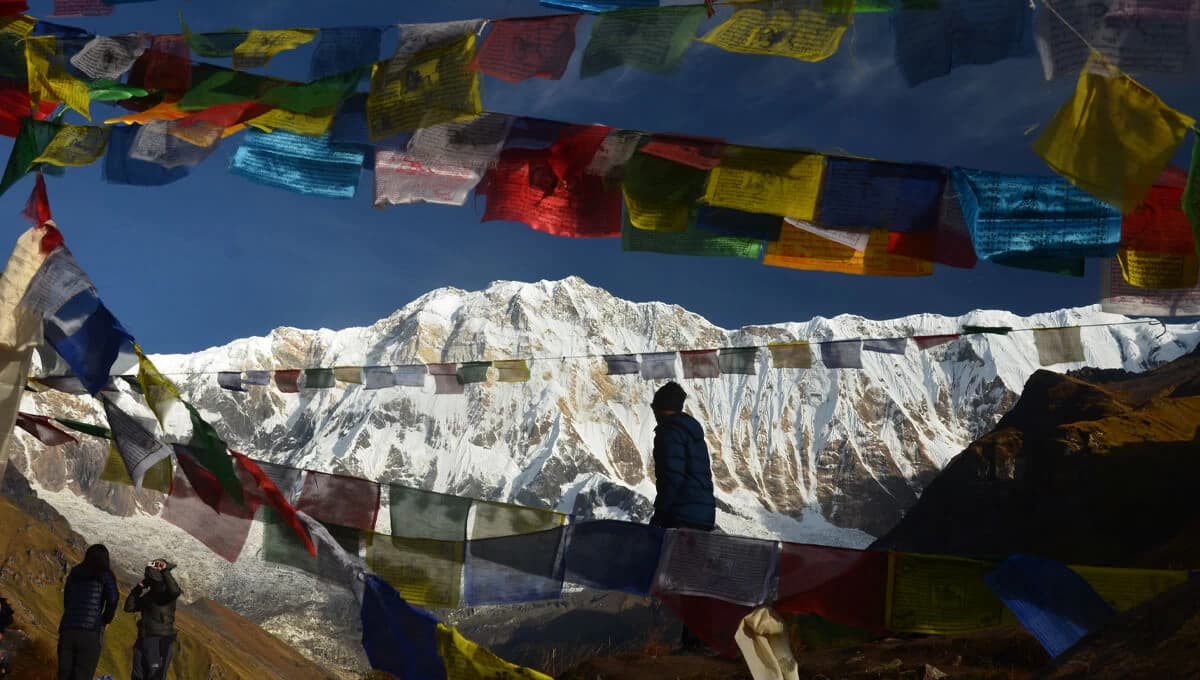
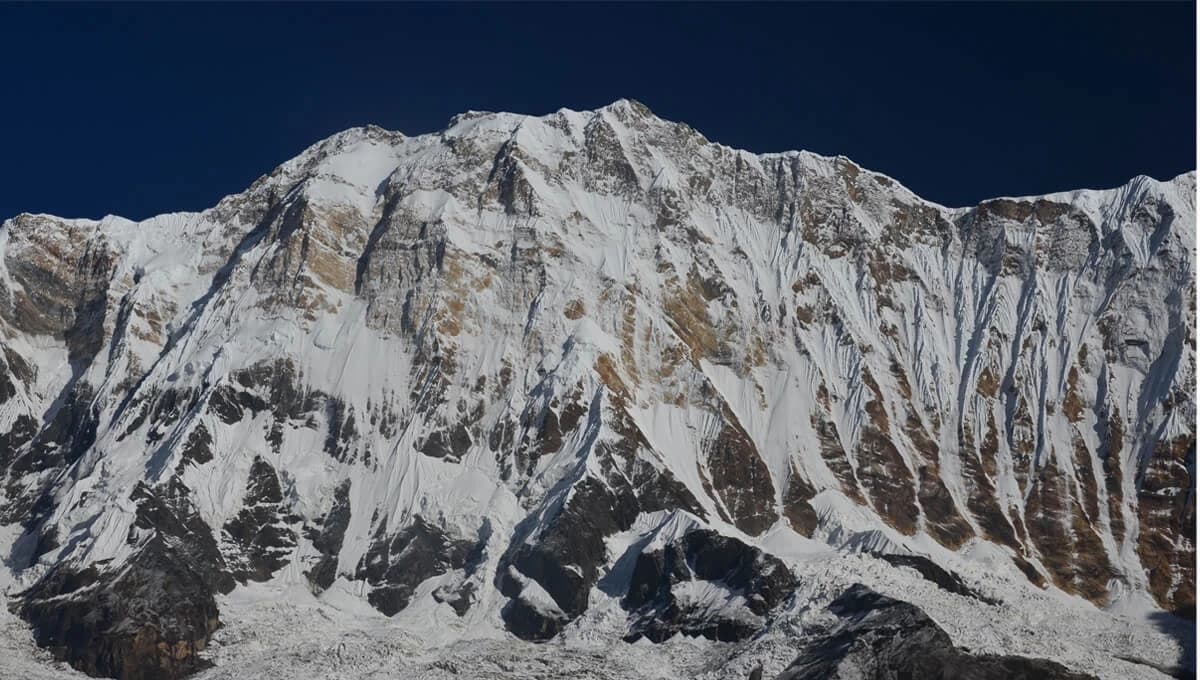
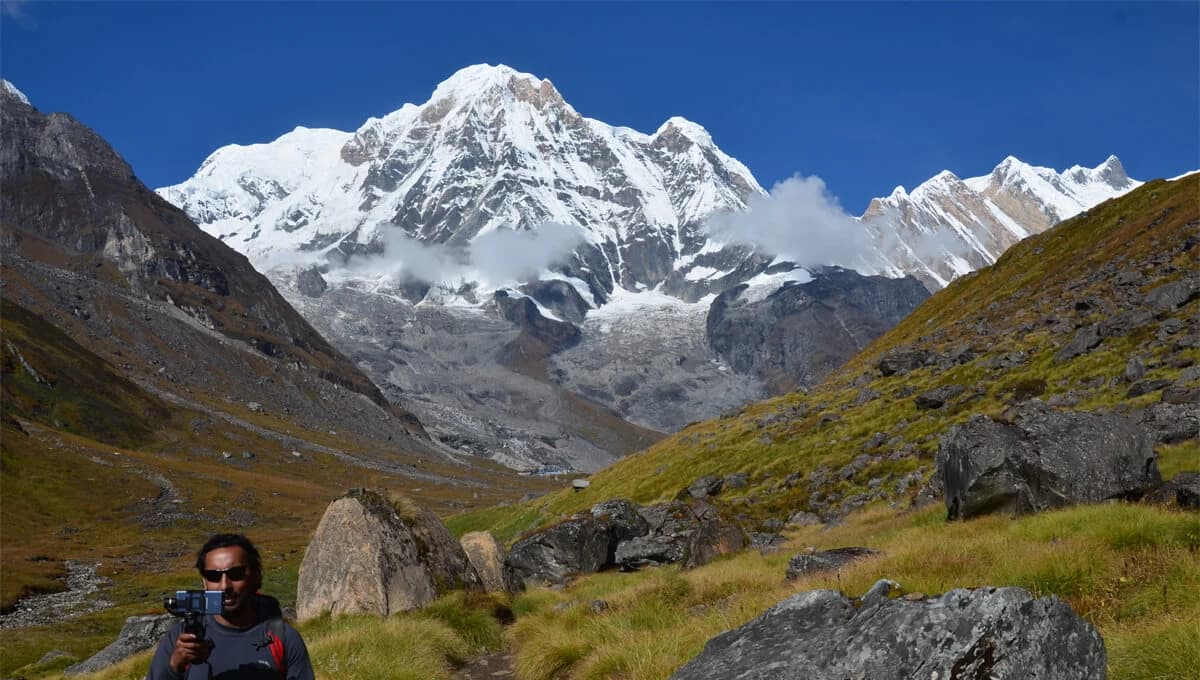
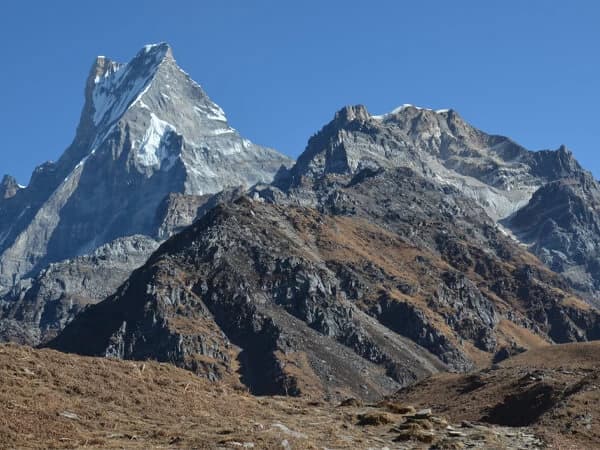
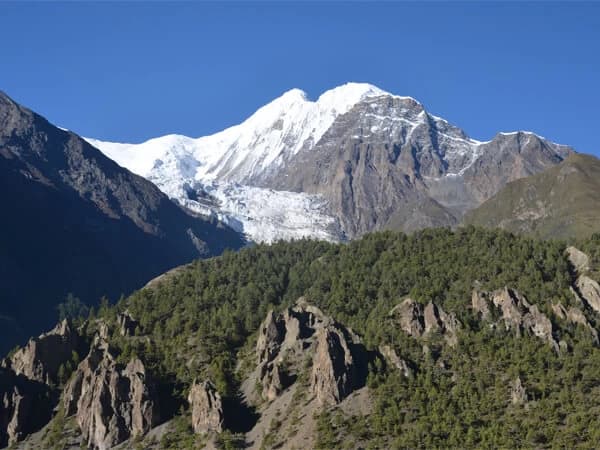
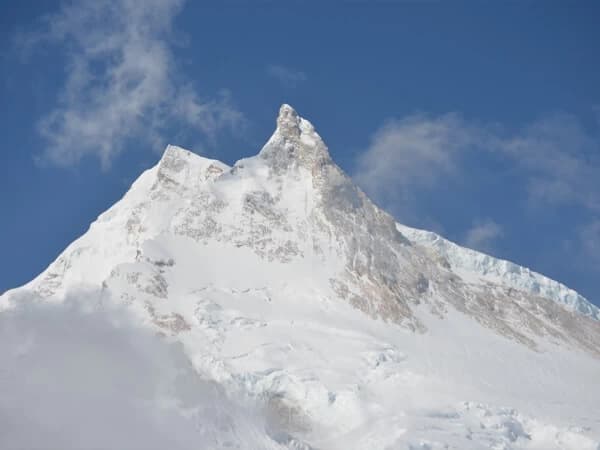
The Annapurna Base Camp trek is one of the most popular treks in Nepal. It is alternatively known as the Annapurna Sanctuary Trek. Every year, over 60,000 trekkers make this trip. Concerning the stunning view of the mountains, beautiful landscapes, rhododendron forests blooming in spring, and Gurung villages, this is one of the nicest treks in Nepal and one of the most popular among trekkers. The trek to Annapurna Base Camp starts after about three hours of scenic driving from Pokhara. The last part of the drive from Birethanti is an off-road section where the Annapurna Conservation Area Check Post is located. The lowland trail leads along the Modi River through lovely villages and rice fields. This trek can be a little bit challenging for beginners due to the stone stairs going up and down, but you will find it worth doing once the beautiful scenery is around you. Once you are in the Annapurna Base Camp, you can have the closest view of Mt. Annapurna I (8091 m), Bharaha Chuli (7647 m), South Annapurna (7219 m), Machhapuchhre (6997 m), and Singha Chuli (6501 m). Apart from the camp, a beautiful sunrise and a panoramic view of the mountain range from Poon Hill, including Mt. Dhaulagiri (8172 m), make this trek even more attractive. In short, to describe the Annapurna Base Camp trek, it is the only trek of Nepal that takes you so close to the Himalayas, so if you dream of seeing the Himalayas so close, then you may not miss planning the trek to Annapurna Base Camp.
Trekking trail to Annapurna Base Camp
There are a few steep ascents and descents on the way to Annapurna Base Camp and back, so you really need to be in good physical condition. The trails are visible throughout the trip, but some sections are in an avalanche area. In particular, the onward trails from Hinku Cave to Machhapuchhre Base Camp are located in an avalanche-prone area. Some parts of the trekking trail from Deurali to Machhapuchhre Base Camp are different during the autumn and spring trekking seasons. In the autumn season, there isn't a strong possibility of an avalanche on the trail to Annapurna Base Camp, so you can take the south side trekking trail from Deurali to reach Machhapuchhre Base Camp. However, if you are trekking during the springtime, you must take the north side trekking trail, which crosses the river from Deurali to reach Machhapuchhre Base Camp. The walking trail to Annapurna Base Camp from Machhapuchhre Base Camp is gradual and does not have any part that requires you to go through an avalanche area. Over 80% of the trekking trail consists of stone stairs, and many people who do not have enough time to prepare for the hike may also get blisters on their feet. If you are planning this trek in early autumn, then you may expect some parts of the trail to be slippery.
Accommodation and Meals in Annapurna Base Camp Trek
At the lower altitude, you can have accommodation in really good standard lodges. In tea houses at Ghorepani, Upper Sinuwa, and Jhinu Danda, you can have a private room with an attached bathroom and a hot shower. However, in the higher places beyond Bamboo, you may need to share a room with fellow trekkers if you are planning your trip to Annapurna Base Camp during the high season in Nepal. Tadapani, Dovan, Himalaya, Deurali, MBC, and ABC have accommodation in a basic shared room. The Annapurna Conservation Area has made limitations on building the new lodges over bamboo, so the number of trekkers to Annapurna Base Camp is increasing every year, and the infrastructure capacity hasn't been increased. Sometimes, if there are not too many trekkers heading up, you might find accommodation in a private room, but it must be booked in advance. The meals served on the Annapurna Base Camp trail are good enough, and you do not have to worry about them. In most of these tea houses, you can choose from a wide variety of dishes on the menu card and place your order for meals. However, some tea houses may have limited meal options, and they will inform trekkers at the time of ordering.
Best time to trek in Annapurna Base Camp
Spring, from February to May, and autumn, from September to December, are good times to plan the trek to Annapurna Base Camp. It's not easy to predict an accurate weather forecast in the mountains, but by this time of the year, the weather is usually good. Sometimes, if the monsoon is staying longer than usual, then you may prepare for the possibility that by September/October, you may expect rain and clouds. In the springtime, there is another charm of the Annapurna Base Camp trek. For most of the Annapurna Base Camp trek, there are huge rhododendron forests, and spring is the time when rhododendrons bloom. If you are planning your trek in Annapurna in the springtime, then you will see a lot of blooming alpine flowers. But there is always a small challenge, whether you are planning your trek in Annapurna either in spring or autumn, because if the monsoon is staying later than usual, then you might have to walk in rain and cloud, and in spring, sometimes pre-monsoon can take place earlier, even from March, and nobody knows when and what time of the year the pre-monsoon is coming to Nepal. In addition to these factors, during the springtime, if the weather is not good, then there is the possibility of thunder and lightning as well. This is why it is said that planning a trip to the Himalayas always has some challenges.
Price/Cost for Annapurna Base Camp Trek 2027/2028
The cost of the Annapurna Base Camp trek depends on the trip package you choose. Our Annapurna Base Camp package includes highly rated three- and four-star hotels in Kathmandu and Pokhara. The mode of transport—taking a tourist bus to Pokhara and back, private transport, or the flights to save your time—influences the prices of the Annapurna Base Camp trek. If you are short on budget for our package price, let us know, and we will advise you on its suitability. Another factor that makes a difference in the Annapurna Base Camp trek package is whether your operator has offered you a private sightseeing plan for the UNESCO World Heritage sites in Kathmandu and Pokhara. This is important because taking a private sightseeing trip to these places is quite expensive. For example, if you take two days of private sightseeing in Kathmandu, the cost of the entrance tickets to these UNESCO heritage sites is about USD 50. While adding the cost of a private car and guide can make your package bigger by over USD 100, so maybe check the services that are included and those that are not before choosing the Annapurna Base Camp Trek offer. Our offer includes all these costs, with no hidden fees.
Backpacking / Gear for Annapurna Base Camp Trek
At the lower altitude of the Annapurna Base Camp trek, the temperature during the day is beautifully warm, and you can walk in short sleeves. As you are gaining altitude in the morning and evening, you can expect chilly weather. The lowest temperature you have to prepare for on this trek is between -10 and -15 degrees in the worst weather conditions, while at the lower altitude, you can expect about +25 degrees during the day. So, depending on your body's adoption of these temperatures, every individual adaptation can vary; however, for reference, you may have a list below of equipment for a gear list for the Annapurna Base Camp trek. We will provide one duffle bag to each member to transport luggage during the trek, and for your day bag, about 30-40 liters is recommended to carry your valuables, spare clothes, water bottle, etc. during the hike.
Upper Parts: Few pairs of t-shirts (3-4), a couple of long sleep shirts, a fleece jacket or merino shirt, one down jacket, light gloves, thick gloves with water/wind proof outer shell, a waterproof jacket, a scarf for neck/head, a warm hat, sun hat, sunglasses UV protection, sunscreen (+30 or more), trekking poles
Lower Parts: few pairs of shorts (2-3), underwear - 4-5 pairs, one pair of trekking trousers, fleece or merino warm underpants, waterproof/windproof trousers, gaiters, few pairs of light trekking socks (3-4), warm socks - 2 pairs, micro crampons, trekking shoes, light sport shoes or sandals
Toiletries: One quick-drying towel, antibacterial hand gel, toothpaste, toothbrush, shower gel, soap, toilet paper, tissue paper, nail cutter, face cream, wet wipes,
Miscellaneous: First aid kit, headlight with batteries, trekking maps, camera, books, water bottle, chargers, power bank, water purifying tablets, vitamins, minerals, sleeping bag ( - 10 degrees minimum), small lock to secure your main luggage, etc.