Best Season for Annapurna Circuit Trek
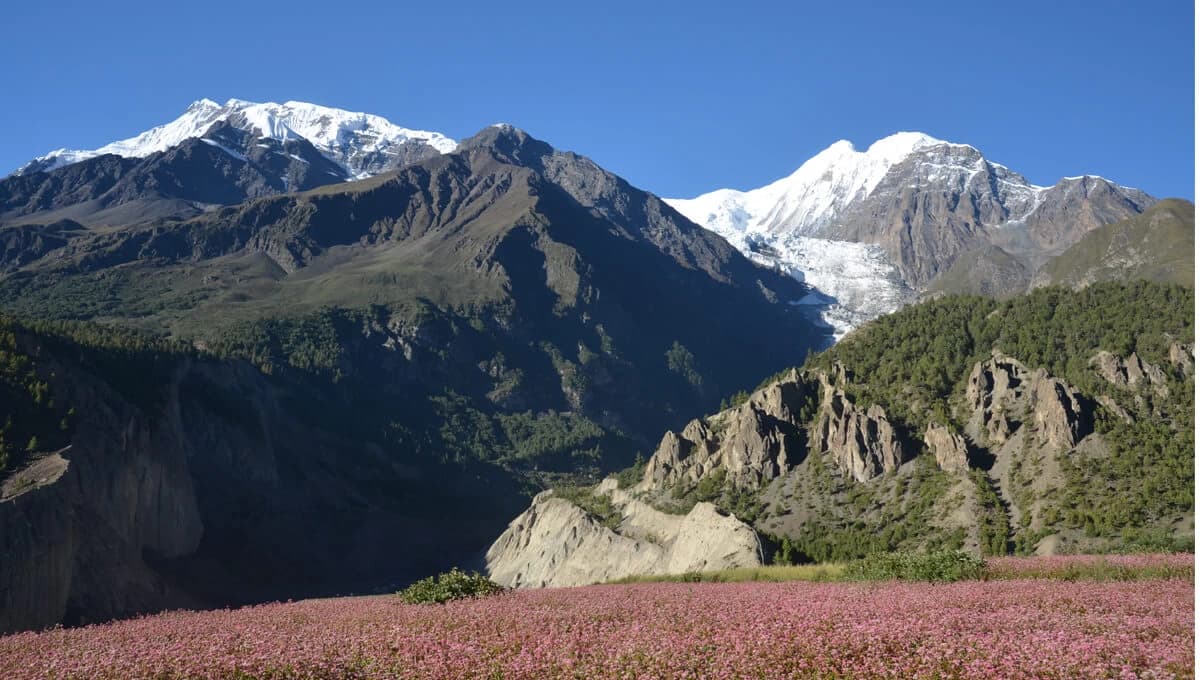
The best times to do the Annapurna Circuit Trek are in the spring (February to May) and autumn (September to December). In the autumn, the weather is usually stable, the skies are clear, and the mountain views are sharp and bright because of the clarity after the monsoon. In the spring, the landscape is full of blooming rhododendrons and new green plants, which make for beautiful views and comfortable temperatures.
It is possible to hike in the winter (December to February), but it is colder and there are snow and icy trails, especially at high passes, which make it harder. The monsoon season (June to August) brings rain and a risk of landslides, so it's not the best time to do a full circuit.
What Makes Annapurna Circuit Trek Special?
-
The Annapurna Circuit Trekis unique because of its varied landscapes, rich culture, and grand Himalayan views.
-
Along its route, trekkers pass through lush subtropical valleys, terraced farmland, rhododendron and pine forests, alpine deserts, high mountain passes, and glacial rivers, giving them a full view of Nepal's landscape.
-
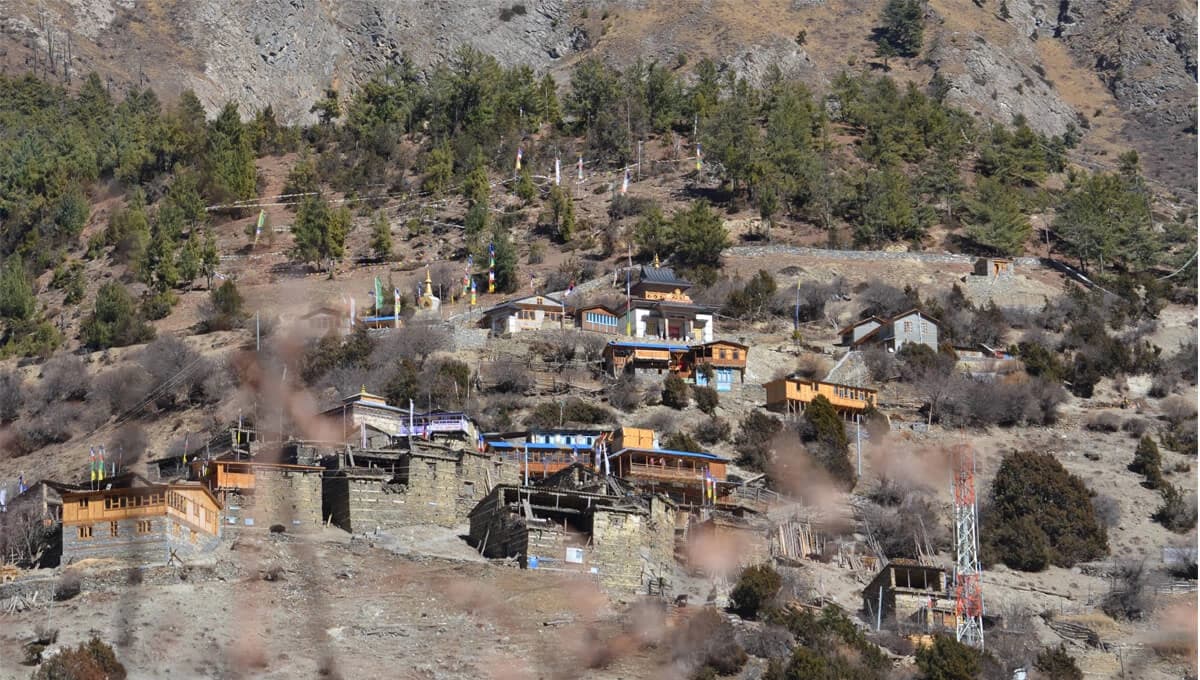
The trek goes through remote villages where Gurung and Thakali people live. This gives you a chance to experience the culture, traditions, and hospitality of the Himalayas.
-
The best part is crossing Thorong La Pass (5,416 m), which is one of the highest trekking passes in the world. It has amazing views of the Alps, snow-capped peaks, and a real sense of accomplishment.
-
Additionally, the route includes unique features like the dramatic Kali Gandaki Gorge, diverse terrain, high‑altitude deserts, and contrasting biodiversity — from river valleys to high Himalayan ridges — making it one of the most iconic treks globally.
How Difficult is the Annapurna Circuit Trek ?
The Annapurna Circuit trek is generally classified as moderate to challenging, depending on the route variant, pacing, and altitude gain.
-
The trek includes long walks every day (usually 5 to 8 hours, sometimes more) over rough, uneven ground, with lots of ups and downs.
-
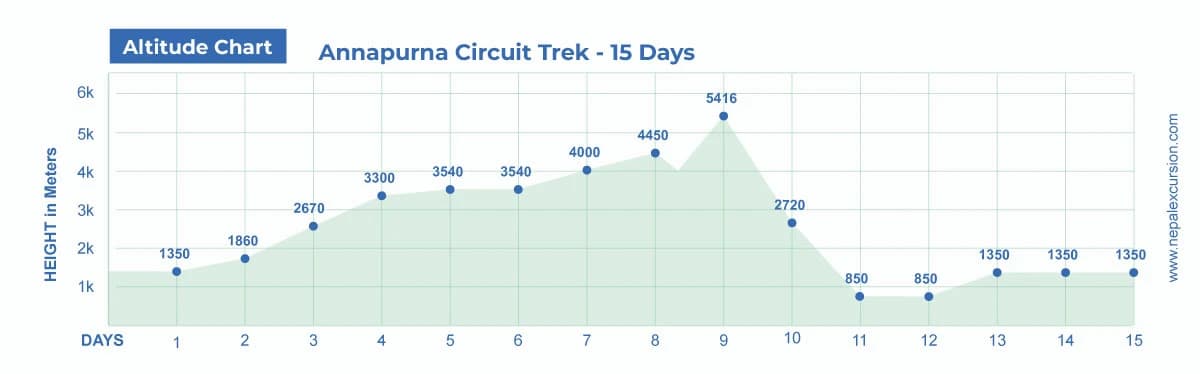
Thorong La Pass, the highest point at 5,416 m, requires good physical fitness, endurance, and careful acclimatization.
-
The different types of terrain, like forest trails, river valleys, rocky scree slopes, and high-altitude deserts, can be hard.
It’s manageable if you’re reasonably fit, prepared for altitude, and willing to listen to your body during acclimatization days.
Permits Required for Annapurna Circuit Trek
To trek the Annapurna Circuit, you need two primary permits:
-
Annapurna Conservation Area Permit (ACAP) — to enter the conservation area covering the circuit.
-
Trekkers' Information Management System Card (TIMS Card) — a mandatory trekking permit for all foreigners trekking in Nepal’s regulated trekking zones.
Nepal Excursion arranges these on behalf of the clients making sure you get a smooth and comfortable start.
Safety and Precautions
Safety on the Annapurna Circuit trek requires careful planning and precautions:
-
Acclimatization is vital. Include rest days in villages like Manang or Yak Kharka. Avoid rapid altitude gain to reduce risk of altitude sickness.
-
Trek with a licensed guide (as per current regulations) for safe navigation, altitude‑awareness, and local knowledge.
-
Drink plenty of water, take it easy, and get some rest. Avoid hard climbs even on acclimatization days.
-
Wear sturdy clothes that are appropriate for the weather. Layers are important because temperatures change a lot with altitude.
-
Carry basic first‑aid supplies, and consider trekking/evacuation insurance covering high-altitude routes.
Training and Preparation
To increase your chances of a comfortable trek:
-
Start doing cardio exercises like hiking, running, or biking 6 to 8 weeks before.
-
To get ready for steep climbs and descents, do leg and core strength exercises like squats, lunges, and climbing stairs.
-
Do practice hikes with weight — train carrying a backpack to simulate trekking conditions.
-
Break in your trekking boots before the trek.
-
Learn about acclimatization: be aware of the risks of high altitudes, make sure you drink enough water, get enough rest, and go up slowly.
Mountain Views
Throughout the trek you’ll be treated to breathtaking Himalayan scenery:
-
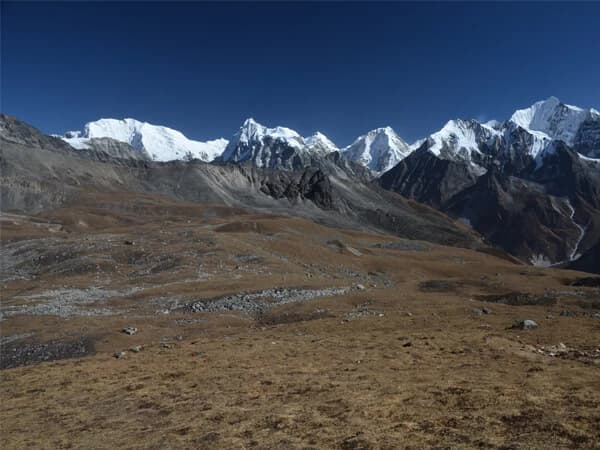
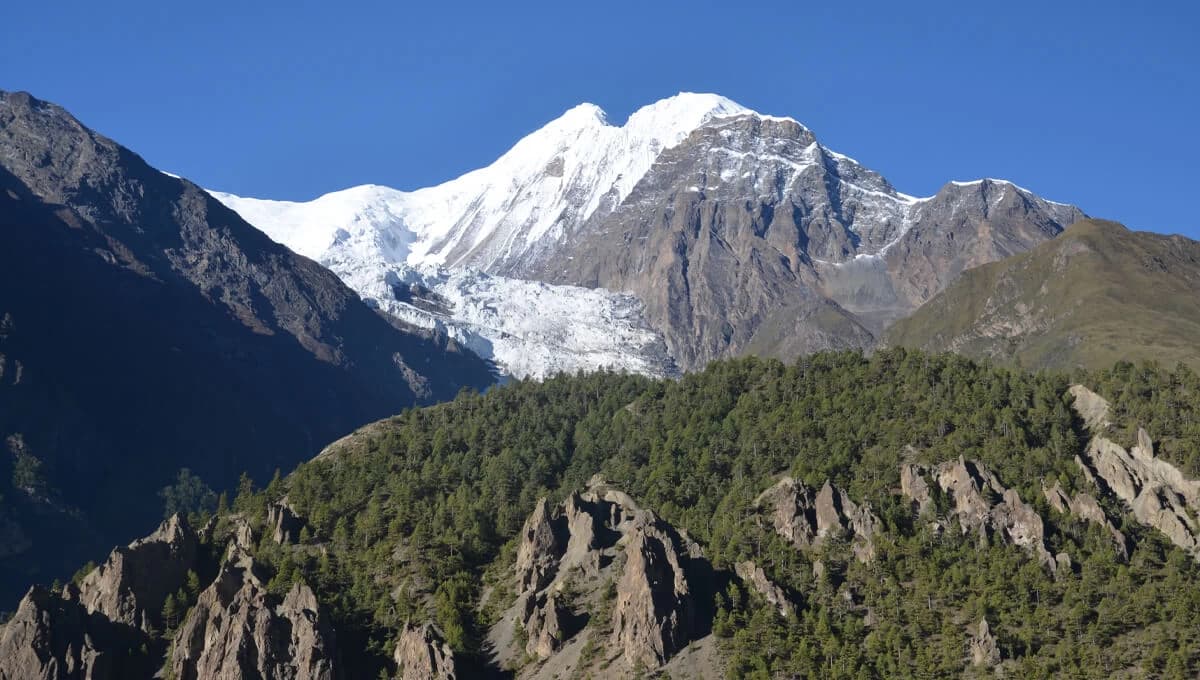
You can see the whole Annapurna range, including Annapurna I, from a distance. The peaks are rough, there are snowfields, and there are ridgelines.
-
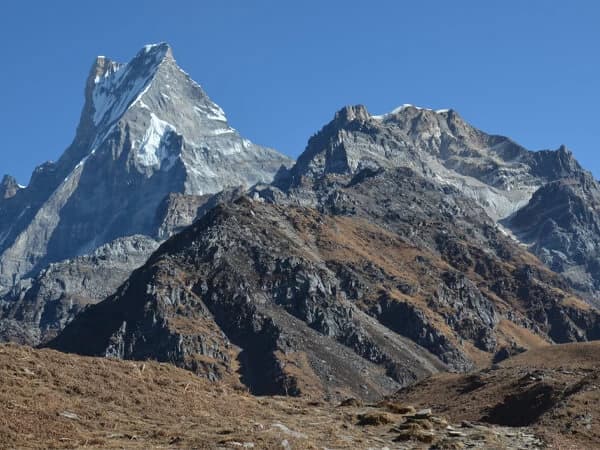
From high points around the circuit, you can see Dhaulagiri, Machapuchare (Fishtail), and other beautiful peaks.
-
The scenery is always changing and varied, with river gorges (especially the Kali Gandaki Gorge), terraced fields, alpine deserts, glacial streams, and layered valleys.
Expect unforgettable sunrises and sunsets over the Himalayas, clear mountain skies (in optimal season), and dramatic contrasts between lush foothills and stark high‑altitude terrain.
Altitude Sickness and Prevention
Because the trek reaches high altitude (up to 5,416 m), altitude illness is a real risk:
-
Include acclimatization days in your itinerary — especially around Manang / Yak Kharka.
-
Hydrate well, eat properly, and avoid heavy exertion on early high‑altitude days.
-
Watch for symptoms: headache, nausea, dizziness, fatigue — descend or rest if symptoms appear.
-
Follow the “climb high, sleep low” principle when possible.
-
Having a guide helps — they monitor group health, altitude conditions, and decide if adjustments are needed.
What to Expect During Annapurna Circuit Trek
Expect a richly varied experience:
-
Trekking through lush valleys, terraced farms, pine & rhododendron forests, then ascending to dry alpine landscapes and arid high‑altitude zones.
-
Daily teahouse‑based accommodation — basic lodges providing meals, simple rooms (shared or twin), and essential comfort.
-
The weather changes a lot, especially near passes, with warm valleys and cold nights at high altitudes.
-
Cultural immersion — interaction with local ethnic communities (Gurung, Thakali, etc.), experiencing their hospitality, traditions, and village life.
-
A sense of achievement — crossing high passes, witnessing dramatic Himalayan panoramas, and being part of one of Nepal’s classic trekking adventures..
Internet Access and Mobile Network on the Trek
Connectivity varies along the route:
-
In villages at lower and middle altitudes (Dharapani, Chame, Pisang, Manang), you can usually get a mobile signal (NTC and sometimes Ncell), and many teahouses have Wi-Fi (though you may have to pay for it).
-
As you go up from Manang to Yak Kharka, Thorong Phedi, and Thorong La Pass, the signal gets weaker or goes away completely. Wi-Fi is also hard to find and not very reliable.
-
Charging devices is possible at many teahouses, often for a small fee; but electricity can be limited at higher altitudes — a portable power bank is highly recommended.
-
Many trekkers download offline maps, carry spare batteries, and treat connectivity as a bonus rather than an expectation
Why Choose Nepal Excursion for Annapurna Circuit Trek
With Nepal Excursion, you get a professionally organized trek that covers all logistics:
-
Permits (ACAP and TIMS) handled in advance.
-
Licensed guides (as required) and optionally porters for heavier gear.
-
Well‑planned itineraries with proper acclimatization days to reduce altitude risks.
-
Comfortable teahouse accommodations, meals arranged, and support throughout the trail.
-
Local knowledge — the team helps with cultural insights, route adjustments (weather, acclimatization), and emergency handling if needed.
This support lets trekkers focus on the experience and scenery rather than logistics, making the trek safer and more enjoyable.
Things You Should Know
-
Some sections may now follow road extensions or jeep tracks, reducing remote trekking parts — check with the operator if you want traditional trail experience.
-
There may not be signal, charging, or hot water in high-altitude areas.
-
Wi‑Fi (when available) and charging often cost extra — bring cash.
-
Weather and trail conditions can change quickly, so it's good to be flexible.
-
Travel/trekking insurance is highly recommended, and it should cover emergencies or evacuations that happen at high altitudes.
Is Annapurna Circuit Trek for Me?
The trek is ideal if you are:
-
Moderately to well‑fit, comfortable with long hikes and varied terrain.
-
Excited to see a lot of different parts of the Himalayas, from low-lying valleys to high-altitude passes.
-
You like culture, nature, and adventure all together—charming villages, mountain views, and local customs.
-
Prepared for basic accommodations, fluctuating comfort levels, and willing to follow acclimatization advice.
It may be less suitable if you seek luxury, dislike shared‑lodging, or prefer guaranteed mobile connectivity — but for those seeking authentic Himalayan trekking, it’s a top choice..
Meals & Accomodation
-
Accommodation is teahouse‑based: simple lodges offering twin or shared rooms. Bathrooms and amenities are basic, often shared.
-
Meals generally include typical Nepali fare — Dal Bhat, soups, noodles, local dishes — hearty and designed to sustain trekking energy.
-
At higher altitudes, the menu may have fewer options. Vegetarian meals are common, and hot showers and heating may be limited or cost extra.
Plan Your Annapurna Circuit Trek Today
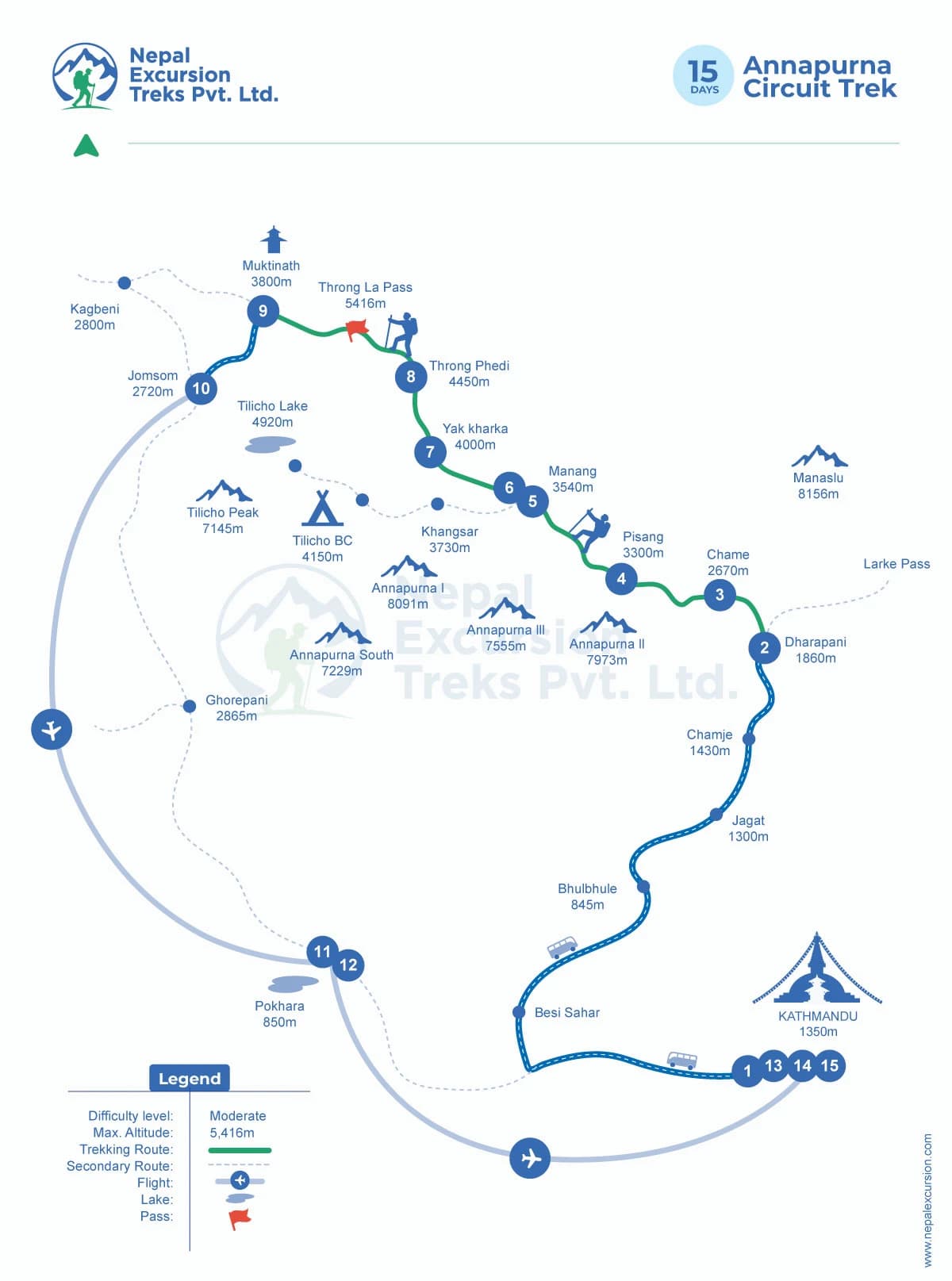
A typical circuit takes 12–15 days, depending on the route variant and pace.
Basic flow:
-
Drive from Kathmandu to start point (e.g. Dharapani or Jagat)
-
Trek through lower hills → forested valleys → ascending villages (Chame, Pisang)
-
Reach Manang — acclimatization stop
-
Cross high alpine zones → pass Thorong La (5,416 m) → descend via Muktinath/Jomsom
-
Continue to lower altitudes → finish at Nayapul → drive (or fly) back to Pokhara or Kathmandu
Nepal Excursion would handle: permits, guide/porter, meals, accommodation, transport to & from trailheads, safety logistics, and more — letting you focus on enjoying the trek.
Highlights
-
Crossing Thorong La Pass (5,416 m) — major achievement and high‑altitude adventure point.
-
Spectacular views of Annapurna I, Dhaulagiri, Machapuchare, and more Himalayan giants.
-
Dramatic landscapes: Kali Gandaki Gorge, alpine deserts, river valleys, glacial zones, terraced hills.
-
Cultural immersion: staying in remote villages, learning about Gurung and Thakali culture, visiting monasteries, and experiencing traditional Nepalese mountain hospitality.
-
A variety of trekking experiences, from subtropical foothills to high-altitude terrain, make this the perfect place for people who want "the full Nepal Himalaya."
Why Choose Annapurna Circuit Trek
The Annapurna Circuit Trek is one of the world’s classic trekking routes, offering an unbeatable combination of breathtaking Himalayan scenery, cultural immersion, and diverse landscapes. It's perfect for hikers who want to see everything from subtropical valleys and terraced farms to deserts at high altitudes and peaks covered in snow.
Choosing the Annapurna Circuit trek means witnessing some of the most dramatic geological and ecological contrasts in Nepal — from deep gorges to lush forests — all while trekking a well-established, scenic, and culturally rich route. Its combination of adventure, natural beauty, and cultural experience makes it a must-do Himalayan trek..
Packing List, Gears, and Equipment
Essential gear includes:
-
Sturdy trekking boots (well‑broken in) + trekking poles
-
Backpack (40–50 L) + small daypack
-
Layered clothing: base layers, fleece, down jacket, waterproof/windproof outerwear
-
Thermal wear, gloves, hat/beanie, sunglasses, sunscreen, lip balm
-
Sleeping bag rated for cold (warm enough for -10 °C or lower)
-
Water bottles + purification tablets or filter
-
Headlamp with spare batteries, power bank (20,000 mAh recommended)
-
First‑aid kit, blister care, personal meds
-
Passport, permits, insurance papers, cash (Nepali Rupees)
-
Optional: solar charger, extra batteries, dry bags, trekking sandals
Given limited charging and internet at high altitudes, a power bank and offline maps are especially important..